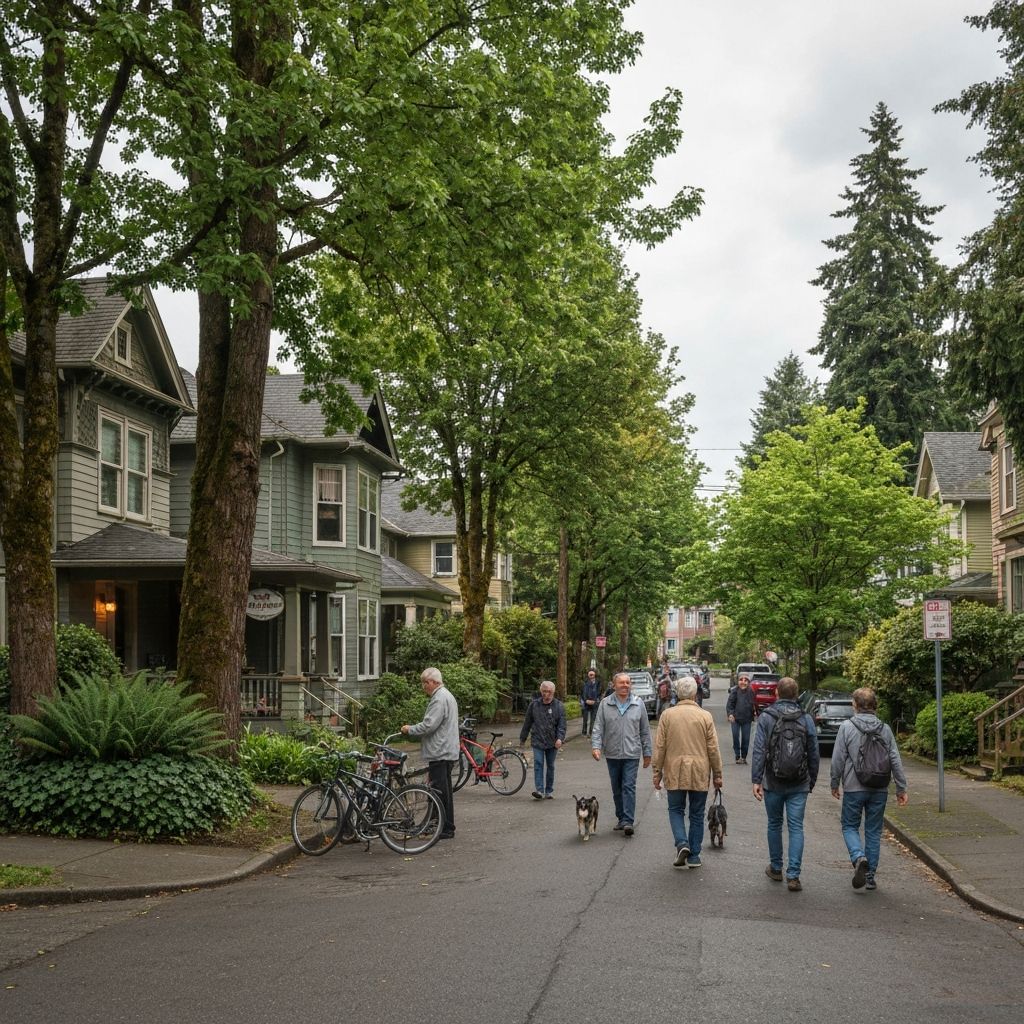
SE Portland — Neighborhood by Neighborhood
Southeast Portland is Portland's largest and most diverse quadrant, stretching from the Willamette River east to the city limits.
Hawthorne
Most IconicPortland's most recognized neighborhood corridor — Hawthorne Blvd between SE 12th and SE 50th is lined with independent bookshops, vintage clothing stores, coffee houses, and restaurants. Housing is a mix of Victorian and Craftsman homes from the 1910s–1930s. Narrow driveways and on-street parking require planning.
- Victorian & Craftsman homes
- Narrow streets and driveways
- Very high move demand
Division Street
Foodie CentralSE Division Street between SE 20th and SE 50th has evolved into one of Portland's most celebrated dining corridors. The surrounding neighborhoods blend Craftsman homes with newer apartment construction. Mid-rise apartment buildings require elevator access coordination.
- Mix of houses & mid-rises
- Busy street — schedule early AM
- Growing apartment stock
Sellwood-Moreland
Family FriendlyPortland's antique district along SE 13th Ave, with wide residential streets, large Craftsman homes on bigger lots, and a community-oriented atmosphere. Sellwood Park and the Willamette riverfront trail make it one of Portland's most desirable family neighborhoods. Trucks have better access here than inner SE.
- Wider streets than inner SE
- Larger lots — easier access
- Strong family demand
Woodstock
Quiet VillageA quiet village-like neighborhood centered on SE Woodstock Blvd between SE 45th and SE 52nd. Bungalow homes on tree-lined streets, local coffee shops, and a strong community identity. Housing stock dates largely from the 1920s–1940s. Move access is straightforward with residential street parking available.
- Bungalow-heavy stock
- Good parking for trucks
- Quiet residential streets
Ladd's Addition
Historic GridA nationally registered historic district with a unique diagonal street pattern that confuses GPS and makes navigation challenging. Beautifully preserved Craftsman homes surround four rose gardens. Moving trucks must approach from SE Hawthorne or SE Division — not all internal streets accommodate full-size trucks.
- Diagonal streets confuse GPS
- Full trucks may need to park outside
- Very high-demand area
Mt. Tabor
Hilltop LivingHomes on and around the slopes of extinct volcano Mt. Tabor offer stunning city views but steep driveways and winding roads. Movers need experience on hillside properties — some driveways require hand-carry from the street. The park itself is one of Portland's most beloved green spaces.
- Steep hillside driveways
- Street-to-door hand carries common
- Extra time budgeted for slopes
SE Portland Moving Costs
Typical ranges for SE Portland moves. Post free to get real bids.
Estimates only. Post free to receive real competing bids.
SE Portland Moving Tips from Local Experts
What experienced SE Portland movers know that out-of-town companies don't.
Portland's Narrowest Streets
Inner SE Portland — especially the streets between SE 12th and SE 50th running east of Ladd's Addition — includes some of the narrowest residential streets in Oregon. Many blocks are just 24–26 feet wide with cars parked on both sides, leaving barely enough room for a standard 26-foot moving truck to pass.
When you post your move, include your specific street address. Experienced SE Portland movers know which blocks require a smaller truck or shuttle service and will factor that into their bid.
Avoid Hawthorne & Division at Peak Hours
SE Hawthorne Blvd and SE Division Street are two of Portland's busiest commercial corridors. Friday and Saturday evenings see heavy bar and restaurant traffic, and even weekday evenings from 5–8 PM see slow-moving traffic that makes truck operations difficult and costly.
Best move times in SE Portland: weekday mornings (Monday–Thursday, 7–11 AM). You avoid rush hour, parking is easier, and most moving companies charge lower rates for off-peak slots.
Portland Rain & Your Move
Portland averages 144 rainy days per year, with the wettest months from November through March. Moving in the rain is common in SE Portland — experienced local movers come prepared with rain covers for boxes, plastic wrap for furniture, and floor runners to protect your hardwood floors from muddy foot traffic.
If your move is scheduled during rainy season, ask your mover how they protect items in wet conditions. Most SE Portland movers have standard rainy-day protocols. The best time to avoid rain entirely is July and August — Portland's dry summer window.
Vintage Home Considerations
The vast majority of SE Portland homes were built between 1900 and 1940 — meaning original hardwood floors, steep staircases with narrow treads, low door clearances, and vintage doorway widths that don't accommodate modern oversized furniture.
Measure your doorways and staircase widths before move day, especially for sofas, sectionals, and bed frames larger than a queen. Many SE Portland movers carry disassembly tools and can break down large items on-site if needed.
Popular Move Routes from SE Portland
Where SE Portland residents move most often — with realistic cost estimates.
Cross-bridge move — Alberta Arts, Irvington, King neighborhood
Urban loft upgrade — freight elevator coordination required
West side move for Nike or Intel employees
Intra-SE move — shorter but older home access challenges
Upscale suburban move south of the city
One of Portland's most common inbound long-distance routes
Estimates only. Post your move free to receive real competing bids.
Living in Southeast Portland
Portland's Most Eclectic Quadrant
SE Portland is the city's most culturally diverse and creatively vibrant quadrant. Stretching from the Willamette River eastward to the city limits, it encompasses everything from the restaurant-dense Hawthorne corridor to the quiet Victorian homes of Sellwood, the volcanic slopes of Mt. Tabor, and the uniquely laid-out Ladd's Addition historic district.
The quadrant attracts a wide mix of residents — artists and musicians drawn to the affordable character homes on Hawthorne and Division, families who prize Sellwood's riverfront trails and excellent schools, and young professionals who appreciate the walkability and cycling infrastructure that makes SE Portland one of America's most bike-friendly urban areas.
SE Portland's food and coffee scene is arguably the best in the city. Division Street alone has spawned restaurants that routinely appear on national best-of lists. The neighborhood supports an extraordinary density of independent businesses — many of Portland's most celebrated roasters, breweries, and restaurants started here.
SE Portland Landmarks & Hotspots
SE Portland Moving Checklist
A complete timeline tailored to SE Portland's historic homes, narrow streets, and rainy season realities.
4–6 Weeks Before
- Post your move on MOVEPack — include your full address, home size, floor count, and any staircase details
- Measure all doorways, hallways, and staircase widths — critical for SE Portland's older homes
- Check if large furniture (sofas, sectionals, king beds) will fit through vintage doorways
- Begin decluttering — sell or donate furniture that won't fit in your new space
- Check the Jaguars-equivalent Portland schedule for street events and marathons
2–3 Weeks Before
- Book your mover — confirm they are experienced with SE Portland's narrow streets and older homes
- Notify PGE (electric), Portland Water Bureau, internet, and trash services
- Update address with USPS, bank, employer, DMV, and voter registration
- Order packing supplies — use water-resistant boxes and bags for Portland rainy season moves
- Start packing non-essential rooms first — books, seasonal gear, garage items
Move Week
- Confirm mover arrival time and walk them through street access and parking logistics
- Prepare an essentials bag — medications, chargers, rain gear, toiletries, change of clothes
- Check the forecast — if rain is expected, ask your mover about their wet weather protocols
- Lay down cardboard or floor runners to protect vintage hardwood floors from muddy traffic
- Disassemble large furniture that may not fit through doorways or up narrow staircases
Move Day
- Be present when movers arrive — walk them through the home and flag any access concerns
- Ensure movers protect floors, doorways, and staircase banisters with pads
- Keep the pathway clear of bikes, carts, and obstacles — SE Portland homes have tight entry points
- Do a final walkthrough of your old home — check basement, attic storage, and garage
- Inspect all items at delivery before signing off — note any rain damage or scratches
- Leave a MOVEPack review — help other SE Portland residents find great movers